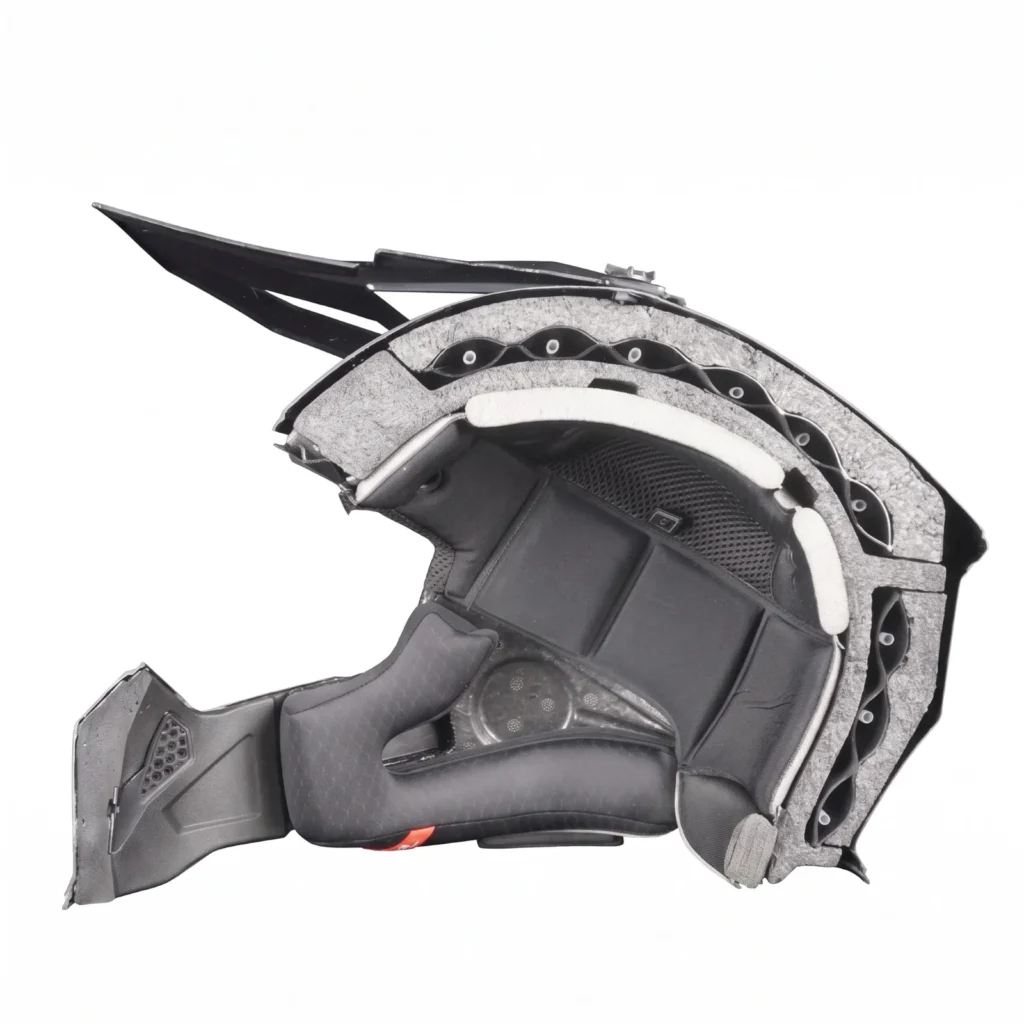
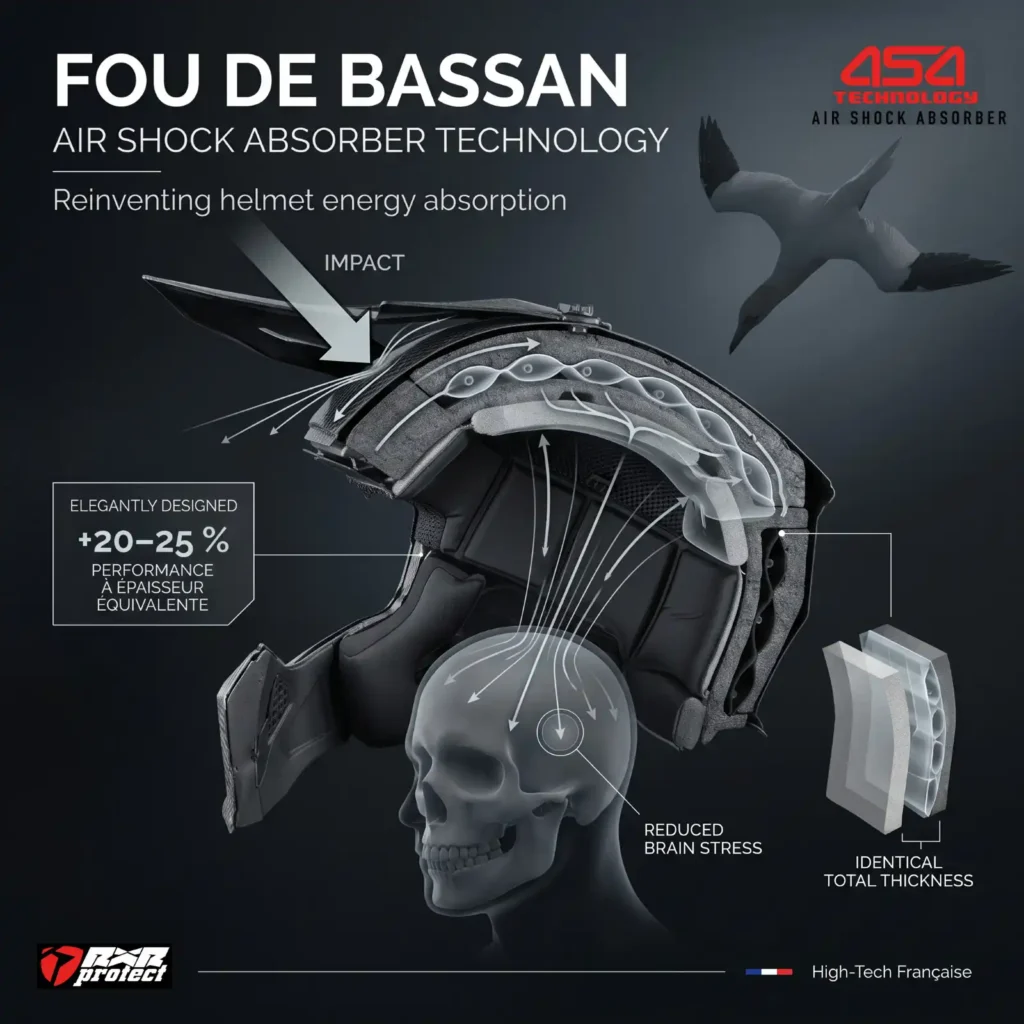
What if the next major breakthrough in helmet technology didn’t come from the shell itself, but from what’s inside it? With the “Fou de Bassan” project, RXR Protect is integrating its Air Shock Absorber (ASA) technology directly into the helmet shell. Initial results show a 20 to 25 percent increase in shock absorption for the same thickness.
For more than 25 years, RXR Protect has been developing energy management technologies for impact situations, specializing in inflatable protection systems. The “Fou de Bassan” project marks the beginning of a new chapter. It’s no longer just a matter of adding protection around the helmet, but of integrating the ASA into the core of its impact absorption system.
The goal is ambitious: to significantly improve a helmet’s impact absorption capacity without making it thicker.
For decades, helmets have been based on a tried-and-true principle: an outer shell combined with shock-absorbing foam, most often made of EPS. This technology has advanced significantly, but expectations have changed.
Research in biomechanics, evolving testing protocols, and new standards are driving the industry forward. The focus is no longer simply on making helmets more durable, but on better managing the energy absorbed and transmitted to the head. This is the area RXR Protect has chosen to focus on.
Air Shock Absorber technology is based on a simple idea: using air to manage the energy of an impact. With “Fou de Bassan,” it takes on a new scale and function.
Integrated into the headliner, it paves the way for a new generation of sound-absorption systems that combine conventional materials with a pneumatic structure designed to manage energy.
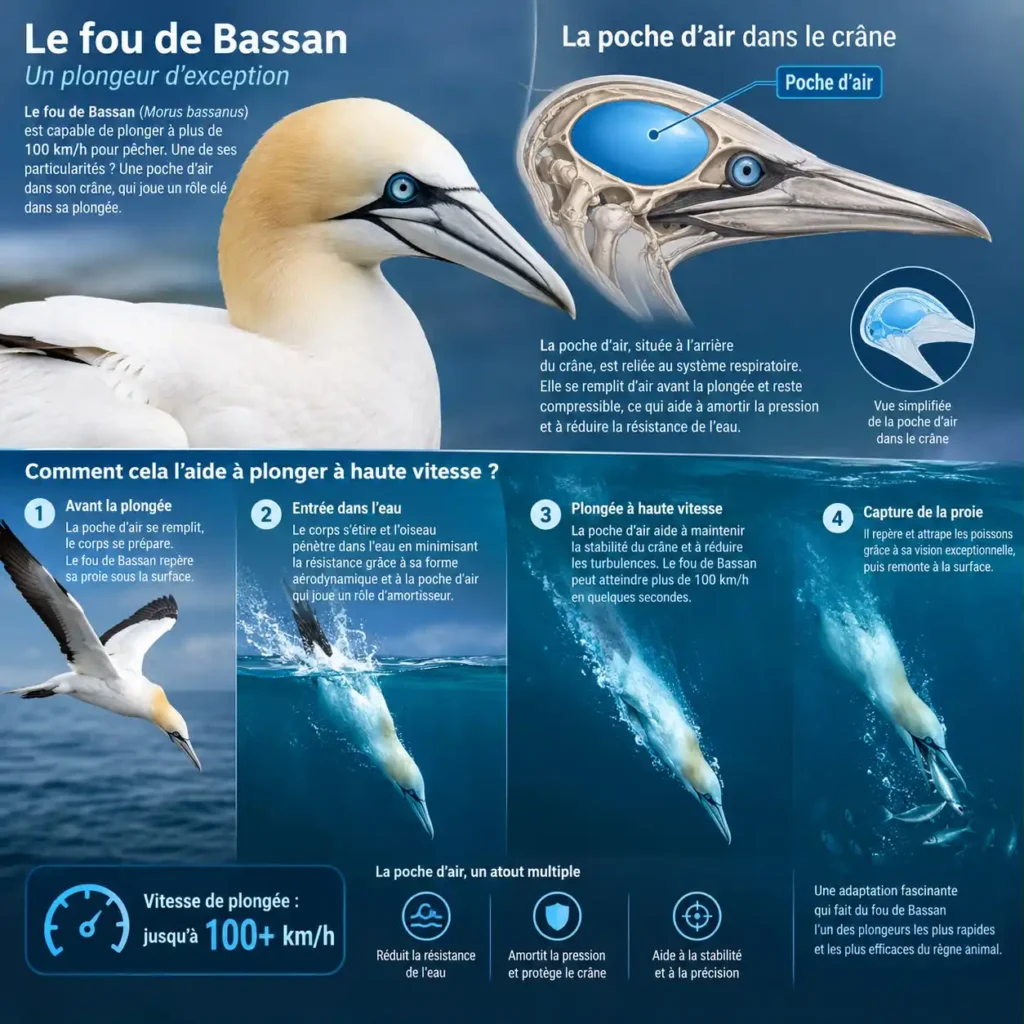
The northern gannet is a seabird capable of diving at very high speeds, thanks in large part to an air sac located near its skull. For RXR Protect, this is an obvious source of inspiration: nature has been coping with extreme mechanical stresses for millions of years. The project applies this principle to modern engineering.
Technology designed for helmets must meet specific requirements:
RXR Protect has therefore designed an ASA architecture that integrates directly into the helmet shell. The goal is to absorb more energy without increasing the helmet’s volume.
Initial tests show performance gains of 20 to 25 percent for the same thickness, depending on the configurations tested. This is an important milestone that confirms the value of combining conventional absorption technologies with a pneumatic architecture.
Development is ongoing to accurately measure performance based on configurations, power levels, and helmet types. The goal is not to replace existing technologies, but to add a new dimension to them.
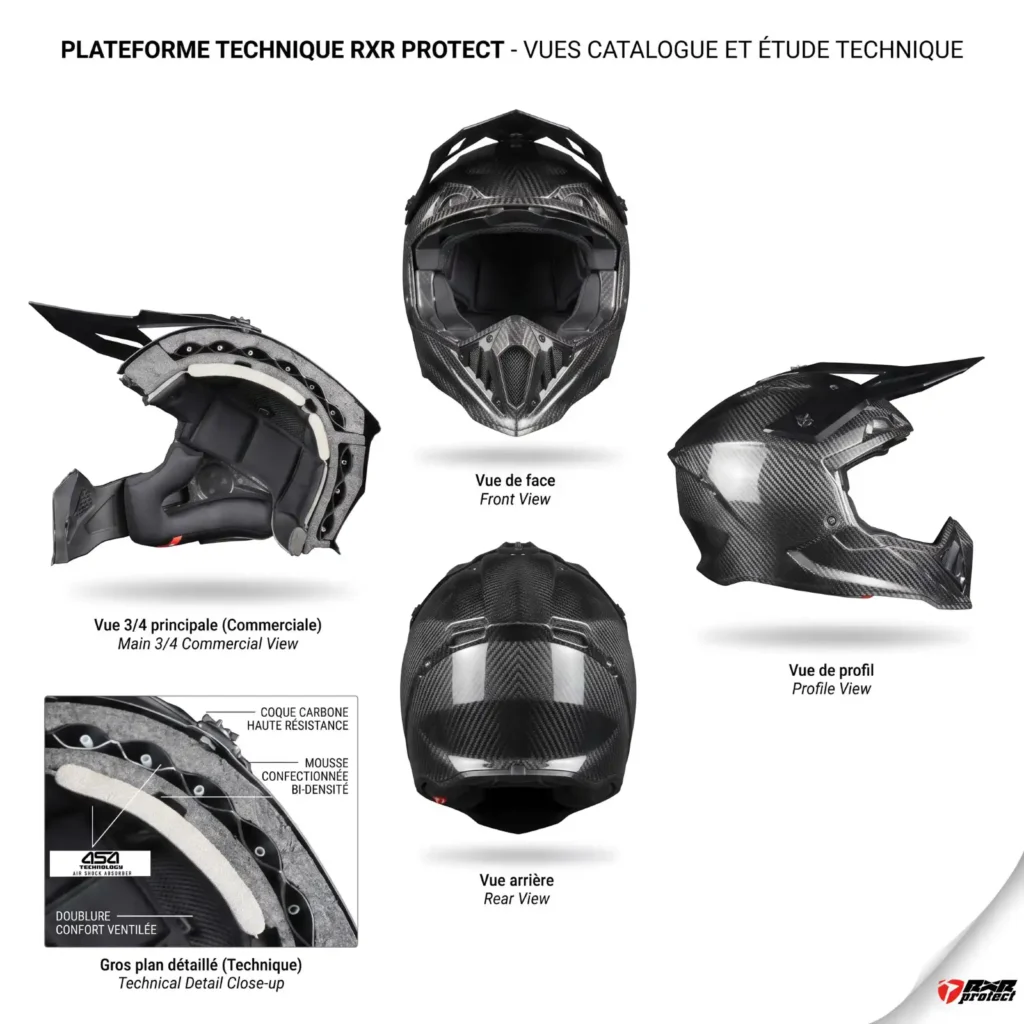
“Fou de Bassan” is more than just an RXR Protect helmet. The goal is to make the ASA accessible to manufacturers by adapting it to their designs, shell sizes, and specifications.
RXR Protect offers to collaborate with manufacturers and original equipment manufacturers at every stage:
The project is entering a new phase, with a clear goal: to launch the first helmet featuring the Air Shock Absorber in 2027.
This will be a major milestone, but only a starting point. RXR Protect aims to make ASA a technology that can be integrated into multiple generations of helmets from various manufacturers.
Over the past nearly 70 years, motorcycle helmets have evolved significantly: composite materials, new impact-absorption designs, management of oblique impacts, and reduction of rotational acceleration. “Fou de Bassan” builds on this legacy while posing a new question: what if the next breakthrough came from inside the helmet rather than its shell?
Are you a helmet manufacturer or an equipment supplier?
RXR Protect is reaching out to stakeholders interested in integrating ASA into their future developments. Contact us to discuss the “Fou de Bassan” project and potential collaborations.